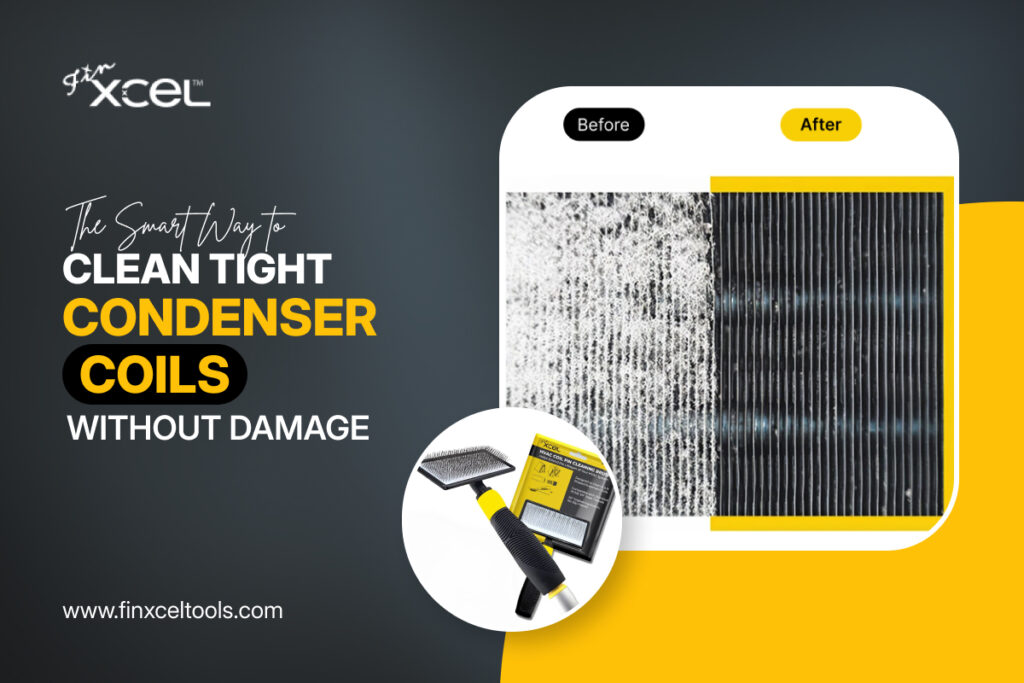
Condenser coil maintenance plays a critical role in preserving HVAC system efficiency, airflow, and long-term equipment performance. Yet one of the biggest challenges technicians face is cleaning tight condenser coils without bending fins, restricting airflow, or causing unnecessary damage.
We understand that effective maintenance requires more than force. It demands precision, consistency, and the right cleaning approach. Our condenser and evaporator coil cleaner brush focus is on delivering reliable coil cleaning solutions that remove debris while protecting delicate coil structures.
Why Tight Condenser Coils Require a Different Cleaning Approach
Modern condenser coils are designed with closely spaced fins to maximize heat transfer efficiency. While this design improves system performance, it also creates narrow passages where dirt, dust, and debris can accumulate over time.
Traditional cleaning methods often rely on excessive pressure or harsh chemicals, both of which can compromise fin integrity. Damaged fins restrict airflow, reduce energy efficiency, and may increase maintenance costs. For this reason, a controlled mechanical cleaning process is often the smarter and safer choice.
Controlled Contact for Accurate Cleaning
One of the most important aspects of condenser and evaporator coil cleaner brush cleaning tight coils is maintaining accurate contact with the fin rows. Tempered stainless steel pins are designed to track fin rows precisely, allowing debris to be removed from deep within the coil structure.
This controlled contact minimizes unnecessary pressure on surrounding fins while ensuring thorough cleaning performance. By following the natural path of the coil design, technicians can clean effectively without risking structural damage.
Fin Protection That Preserves Airflow
Condenser fins are delicate components that play a direct role in maintaining airflow and heat exchange efficiency. Any distortion can negatively impact overall system performance.
Engineered pin spacing helps preserve the original fin structure during cleaning. By maintaining proper alignment with fin rows, the cleaning process protects airflow channels while removing accumulated dirt and debris. This approach supports optimal airflow and helps extend the service life of the equipment.
Residue Free Operation
Many cleaning methods depend on chemical solutions that can leave residue behind. Over time, leftover residue may attract additional dirt or require additional rinsing.
Dry mechanical cleaning eliminates this concern entirely. Since no chemicals are involved, the process leaves no residue on the coil surface. Technicians can achieve effective cleaning while maintaining a cleaner, more environmentally responsible maintenance process.
Repeatable Performance Across Coil Conditions
Condenser coils can vary significantly depending on operating environments and maintenance history. Consistency is essential when dealing with different levels of buildup and contamination.
A precision cleaning method delivers repeatable performance by reliably removing debris across varying coil conditions. Whether handling light dust accumulation or more challenging buildup, the cleaning process remains controlled and dependable, helping technicians achieve predictable results every time.
Conclusion
Proper condenser coil maintenance is about balancing cleaning effectiveness with equipment protection. We believe that using precision-engineered cleaning tools allows technicians to remove debris efficiently while preserving fin integrity, airflow performance, and system reliability. Our commitment is to support smarter maintenance practices that keep HVAC systems operating at their best for years to come.
Keep your condenser coils cleaner, safer, and more efficient with a precision-driven maintenance approach. Choose the right evaporator coil cleaner brush solution today and experience reliable performance without compromising coil integrity.
FAQs
Q1. Why is fin protection important during condenser coil cleaning?
A: Fin protection helps maintain proper airflow and heat transfer efficiency by preventing bent or damaged fins that can restrict system performance.
Q2. Does dry mechanical coil cleaning leave any residue behind?
A: No. Dry mechanical cleaning removes debris without chemicals, leaving coils clean and free from residue that could attract additional dirt.
Q3. Can the same cleaning method work on different coil conditions?
A: Yes, precision mechanical cleaning provides consistent debris removal across varying coil conditions, helping technicians achieve reliable maintenance results.